

Provençal Garlic Soup (Aïgo Boulido)
This post may include affiliate links, which may earn me a small commission at no extra cost to you.
Since starting my Soups That Don’t Suck series, I’ve gotten SO many requests from you to try soups from around the world. So I’m starting a little series within the series to explore soups I’ve never made before, learn about their history, and try my hand at making them myself. I’m certainly not the expert here, but I love a good cooking challenge and any excuse to learn more about a culture through its food.
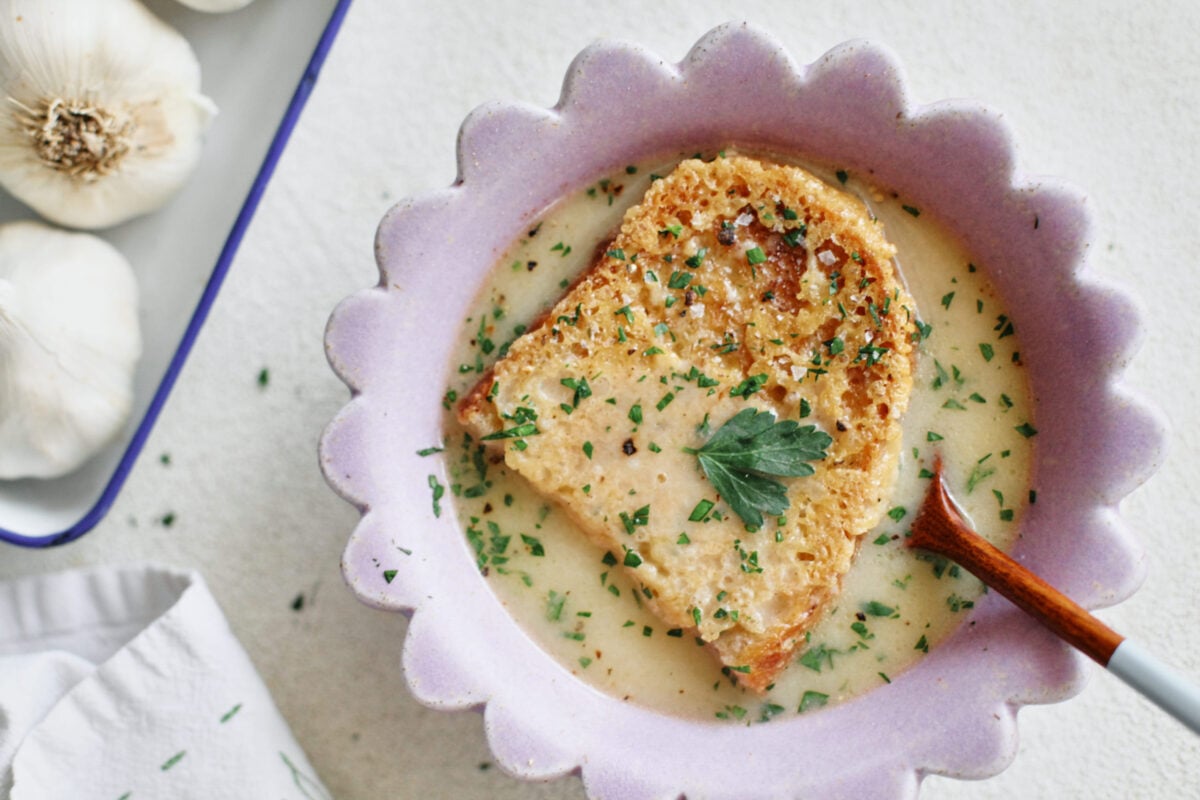
First up is Provençal Garlic Soup, also known as Aïgo Boulido. When I first came across it, I thought of it as simply a French garlic soup, but there’s a lot more history behind it (more on that below). What I love most is how much flavour comes from such a short ingredient list. The garlic gets wonderfully mellow as it simmers, the fresh herbs give the broth a delicate, fragrant flavour (especially the sage), and tempering eggs into the broth gives it a silky texture and just a little creaminess without any dairy. Honestly, I think we need to be tempering eggs into more soups!
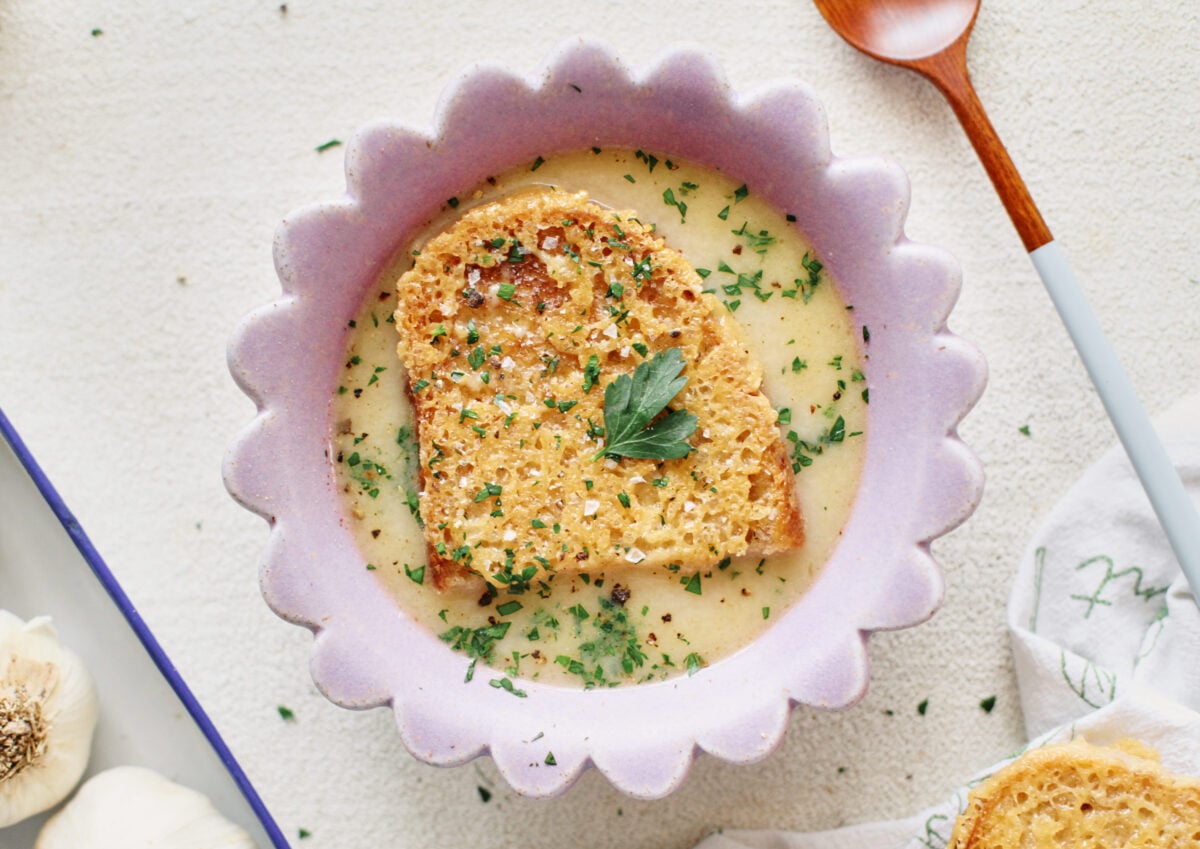
I finish mine with a slice of crispy, golden Gruyère toast, a little nod to the traditional way of serving the broth over stale bread.
More garlic soups from my kitchen:
- Garlic Soup aka Česnečka, the Czech classic that started my garlic soup era
- Golden Garlic Soup, my česnečka with turmeric
- Mighty Greens Garlic Soup, loaded with broccoli and kale
History of Garlic Soup
Aïgo Boulido comes from the culinary traditions of Provence in southern France, where Provençal, a variety of the Occitan language, has been spoken for centuries and is still spoken today. In Provençal, aïgo boulido translates to “boiled water,” which doesn’t exactly do this soup justice! Historically it was a soupe du pauvre, or “poor man’s soup,” made with cheap, simple ingredients like garlic, wild herbs, olive oil and stale bread. There’s even an old Provençal saying, l’aigo boulido sauvo la vido, which roughly means “boiled water saves your life,” and it’s long been the go-to after a big feast or a big night out.
I can’t talk about this soup without giving credit to Julia Child. Her version (spelled Aigo Bouido) in Mastering the Art of French Cooking, which she wrote with Simone Beck and Louisette Bertholle, introduced so many home cooks outside of France to this dish.
Simmer, Don’t Boil
(Yes, Even Though It’s Called “Boiled Water”)
The one thing to really pay attention to here: keep the broth at a gentle simmer, not a rolling boil. Because the garlic cloves go in whole, they slowly soften and turn sweet and mellow instead of sharp. A gentle simmer keeps that flavour delicate, and it’s what makes this taste like a fragrant herby broth rather than a mouthful of raw garlic. Twenty cloves sounds like a lot, I know. Trust me on this one.
Key Health Benefits of Garlic
- Boosts the Immune System: Garlic has natural immune-boosting properties due to its high content of antioxidants, particularly allicin. These antioxidants help to strengthen the immune system and may reduce the risk of common illnesses like the flu and colds.
- Anti-Inflammatory Properties: Garlic contains compounds that have anti-inflammatory effects. Regular consumption of garlic may help reduce inflammation in the body.
- Detoxification: Garlic can aid in the body’s natural detoxification process by supporting the function of the liver, which helps eliminate toxins from the body.
Ingredients
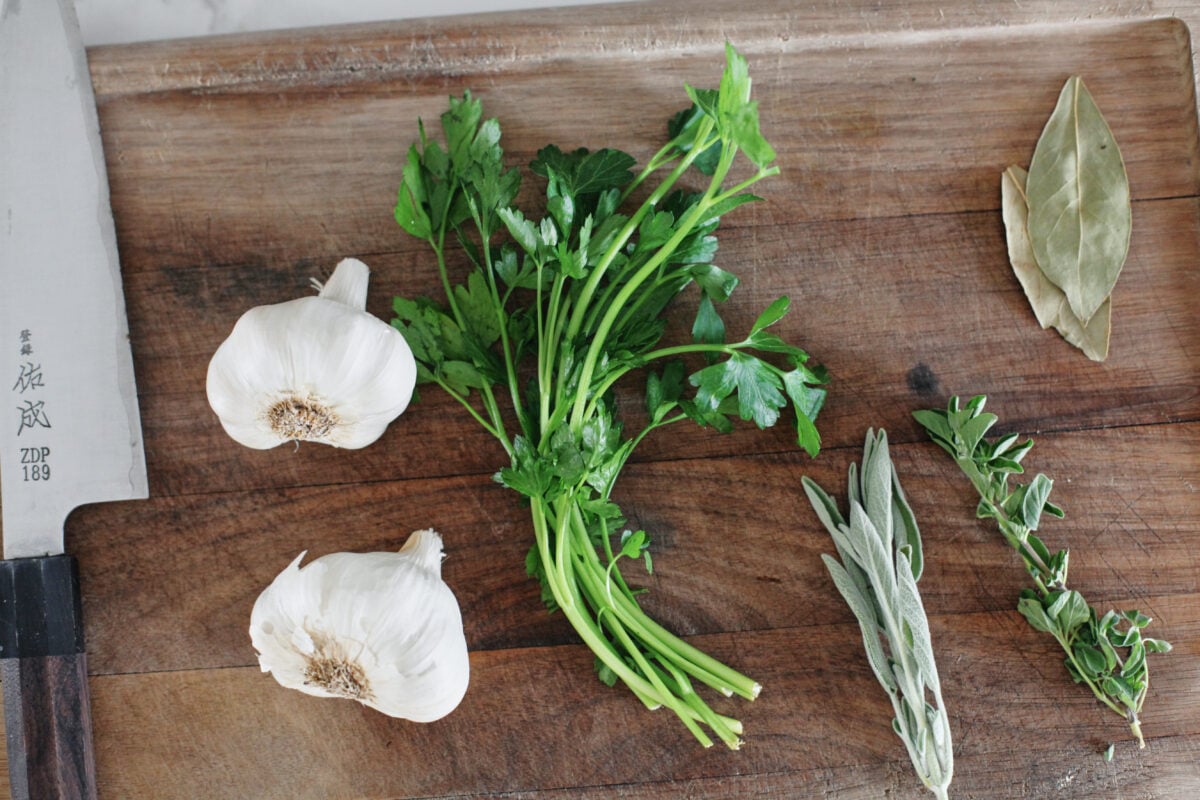
- 2 heads garlic (about 20 cloves), peeled: The star of the show. See the blanching trick below for easy peeling.
- 3 tbsp olive oil, divided: 2 tbsp to sauté the garlic, 1 tbsp whisked into the eggs.
- ~6 fresh sage leaves: My favourite part of this soup. Fresh only here, dried sage won’t give you the same flavour.
- 3 sprigs Italian parsley, plus extra for garnish
- 2 sprigs fresh thyme
- 2 bay leaves
- 4 cups chicken stock or water: Water is traditional (it’s right there in the name), but stock gives you a richer broth.
- 2 large eggs, or just the yolks: Just using the yolks makes it a little richer and more golden.
- Kosher salt and black pepper, to taste
- Rustic bread: French bread, baguette or sourdough, sliced
- Gruyère cheese, grated
Prep STEPS
The only real prep is peeling 20 cloves of garlic, and there’s a trick for that. Drop the cloves into boiling water for 30 seconds, then scoop them out with a slotted spoon or spider strainer. Let them cool slightly and the skins slip right off! This step is optional, so peel your garlic however you like.
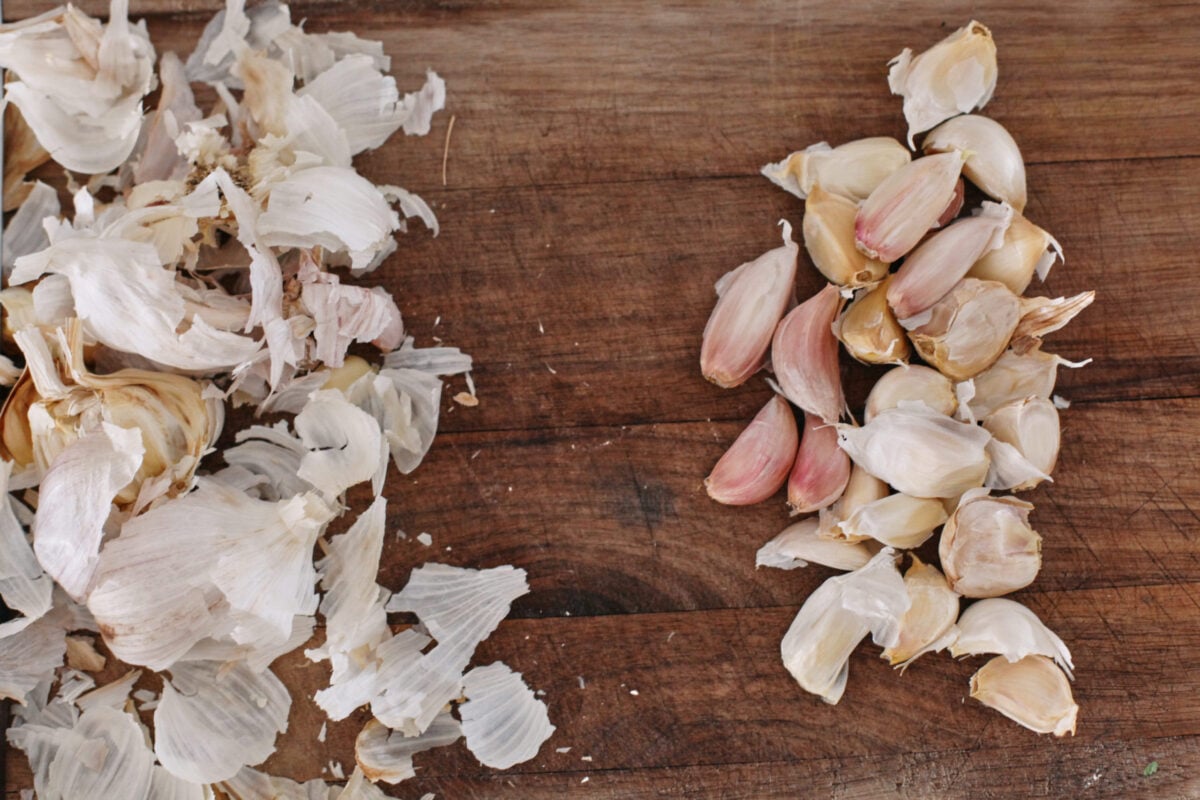
- Peel the garlic and leave the cloves whole.
- Pick your sage leaves and gather the parsley, thyme and bay leaves.
- Slice the bread and grate the Gruyère.
Toast Options
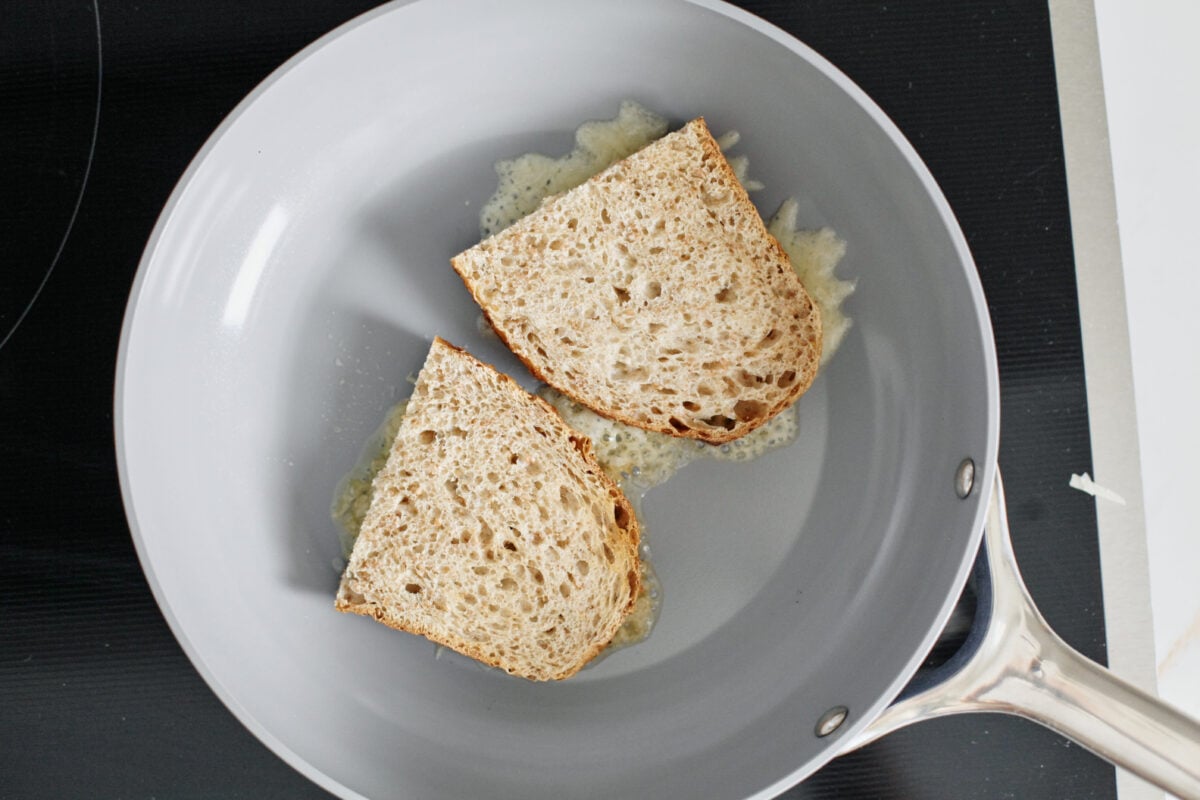
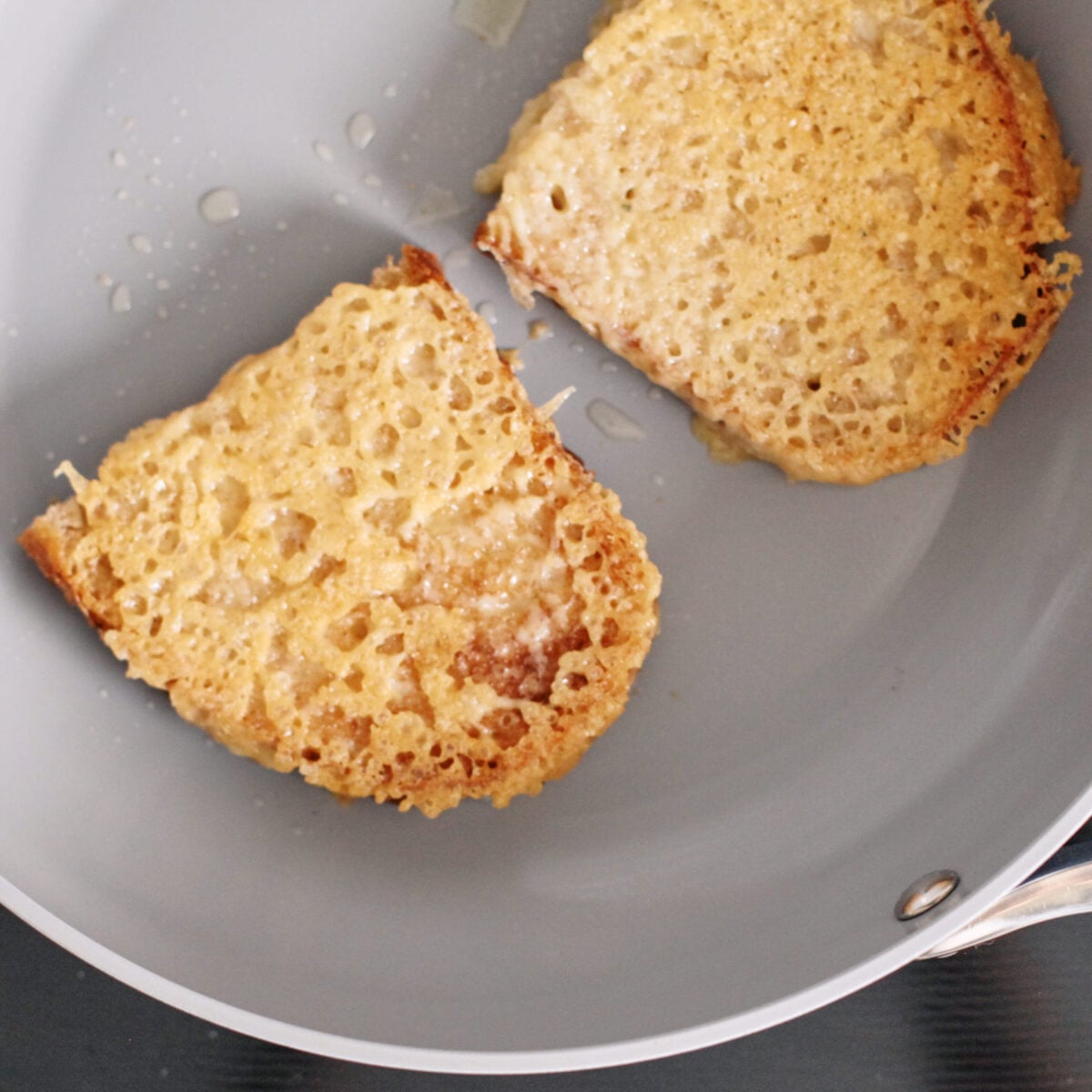
I make the cheesy toasts by putting the grated Gruyère straight into a nonstick skillet and pressing the bread right on top, so the cheese melts and crisps into a golden crust. Any bread works here, baguette slices included. A few other ways to get there:
- Nonstick skillet (my choice): Cheese goes into the pan first, bread on top, flip when the cheese is golden.
- Under the broiler: Top the bread with grated Gruyère and pop it under the broiler until golden and bubbly. Keep an eye on it, it goes fast.
- Stainless steel: Toast the bread in a little butter over medium heat, flip, pile the Gruyère on top, and cover with a lid for 1–2 minutes until melted.
- Cast iron: Heat a well-seasoned, lightly oiled pan over medium, add the Gruyère, press the bread on top, and leave it alone until the cheese is deep golden and releases easily before flipping.
- No cheese: Sear the bread in a tablespoon of butter until golden on both sides.
What You’ll Need
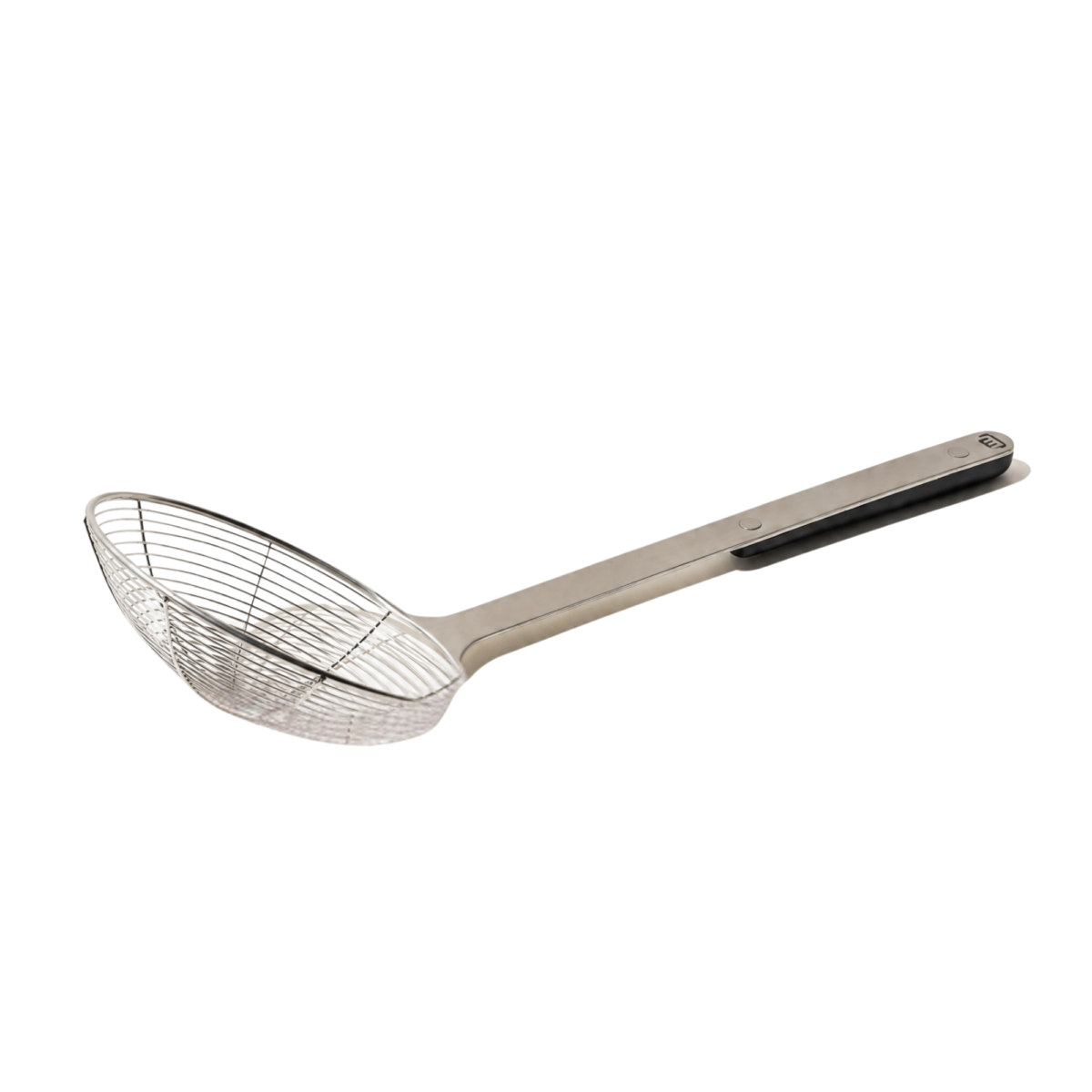
Here are some of the tools I reached for while making this recipe:
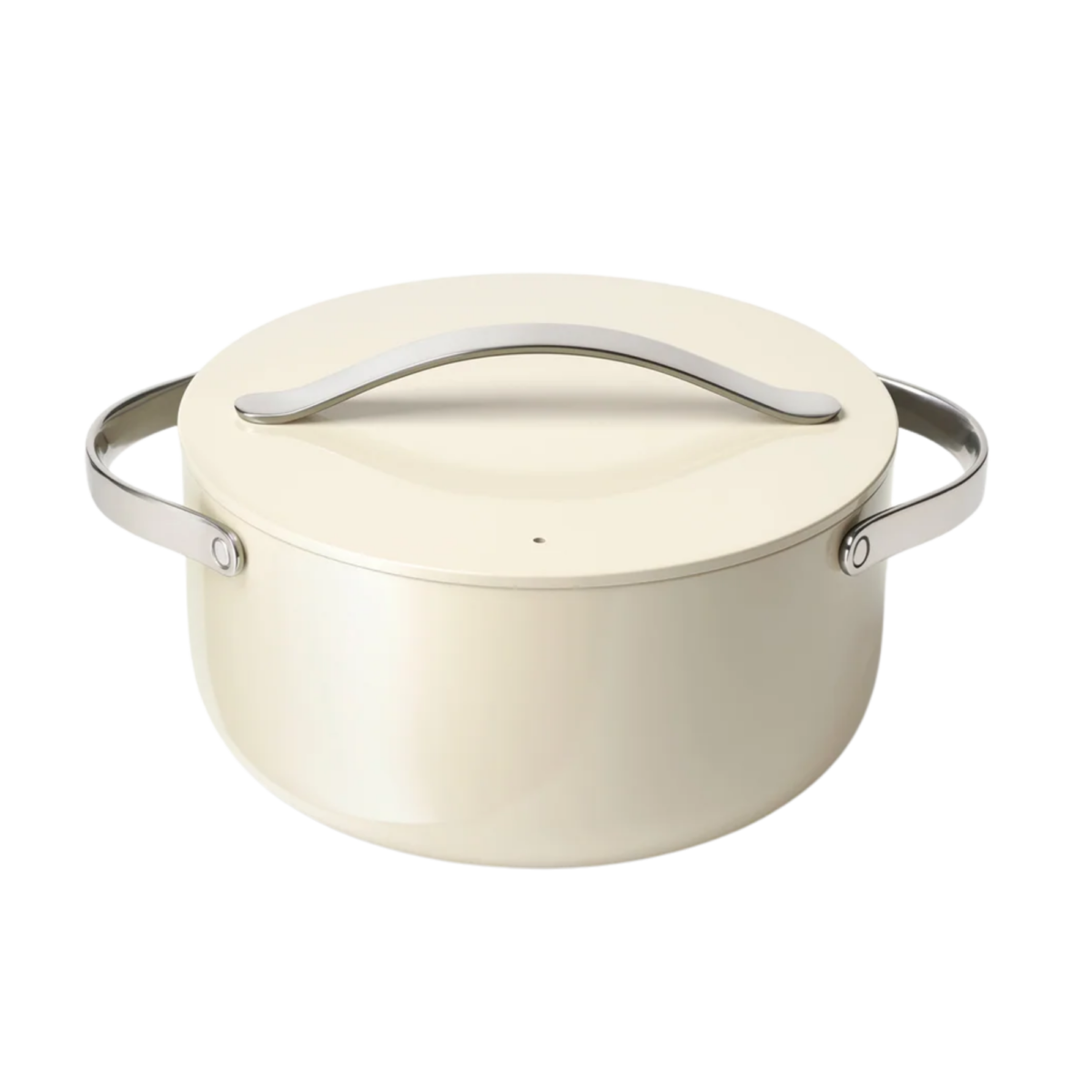
I’ve been loving this pot from Caraway. They refer to it as a dutch oven, but it’s fairly lightweight and perfect for a simple soup like this one. Any medium or large pot you have will work here.
A spider strainer or slotted spoon for straining all of the herbs from the broth before blending. If you don’t already have a spider, you’re going to end up using it more often than you think!
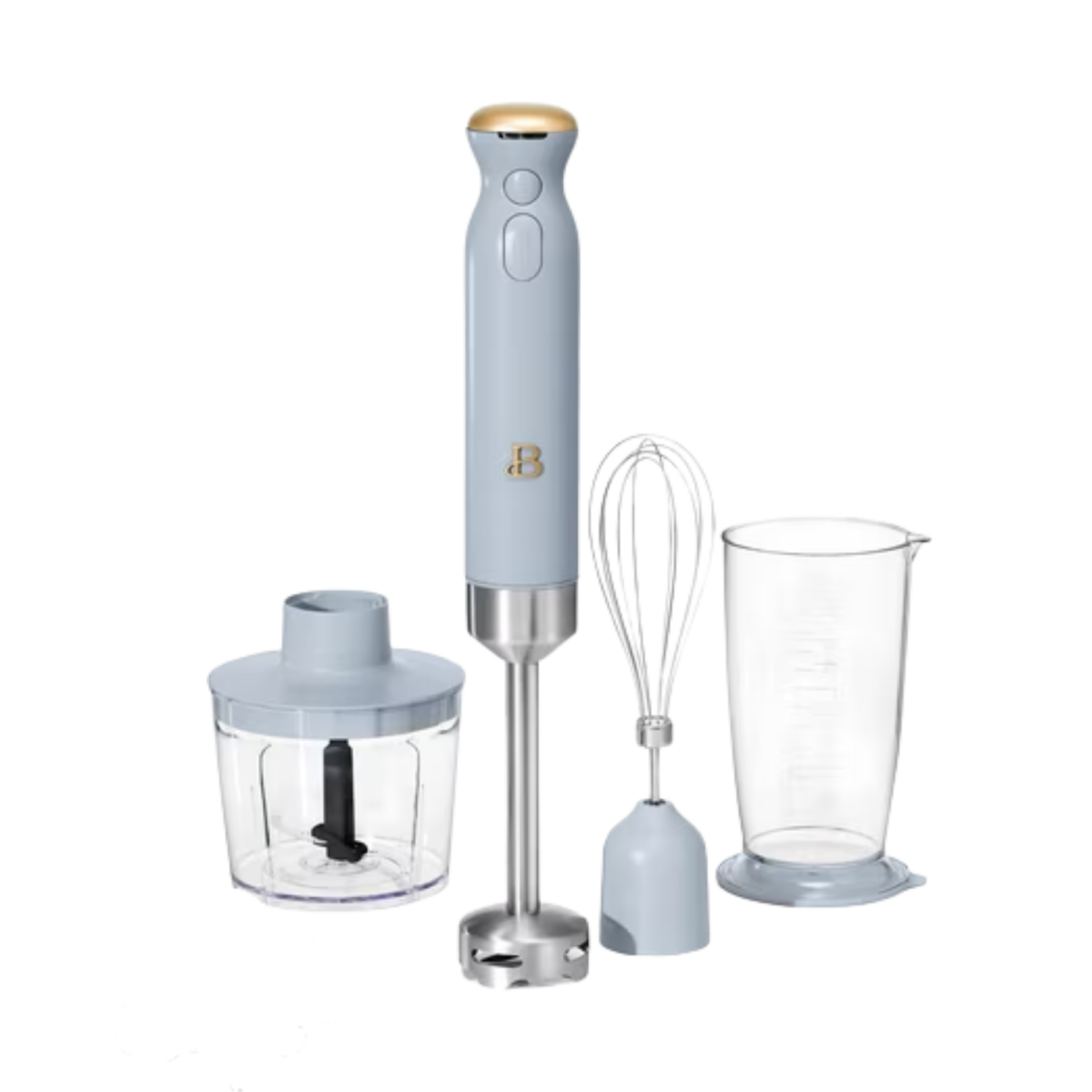
I alternate between using an immersion blender and a countertop blender when blending soups, so it’s really up to you. I love how convenient the cordless version is.
How to Make it
Step One:
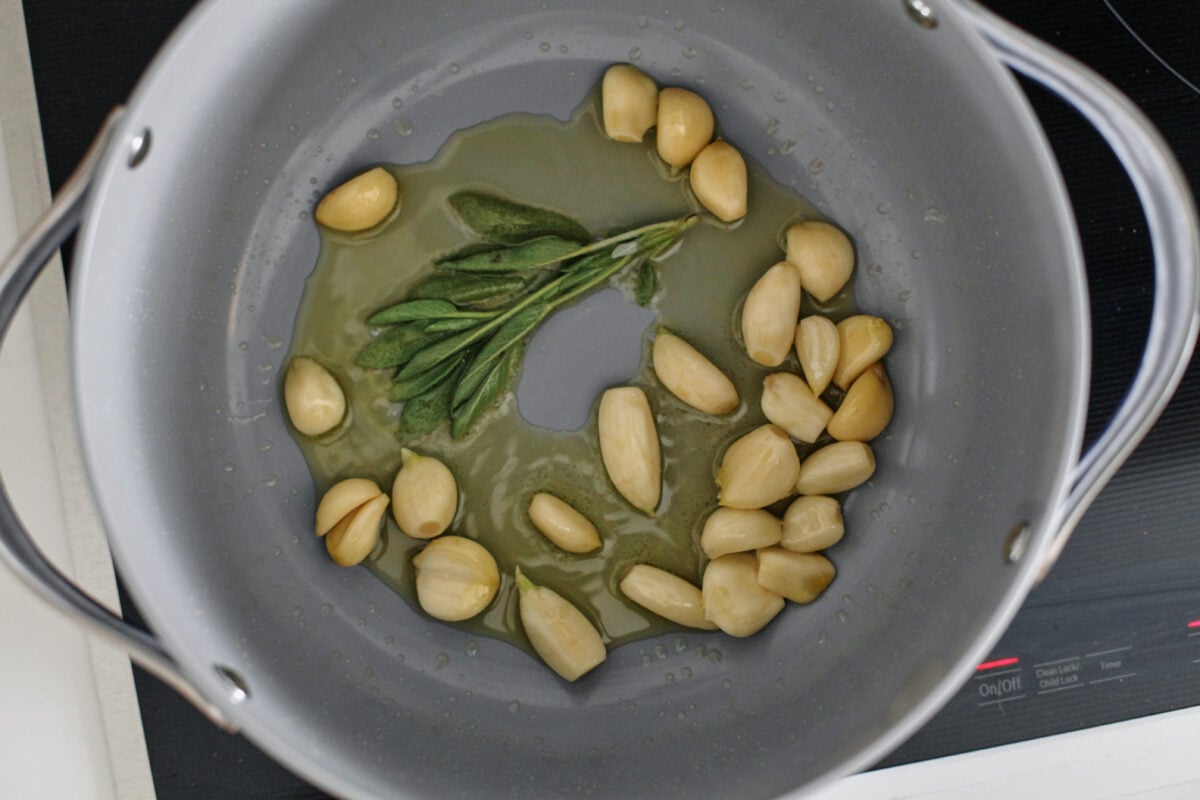
Heat 2 tbsp olive oil in a medium or large pot over medium heat. Add the whole garlic cloves and sage leaves and cook for about 3 minutes, stirring occasionally, until the garlic and sage are just starting to turn golden and fragrant.
Step Two:
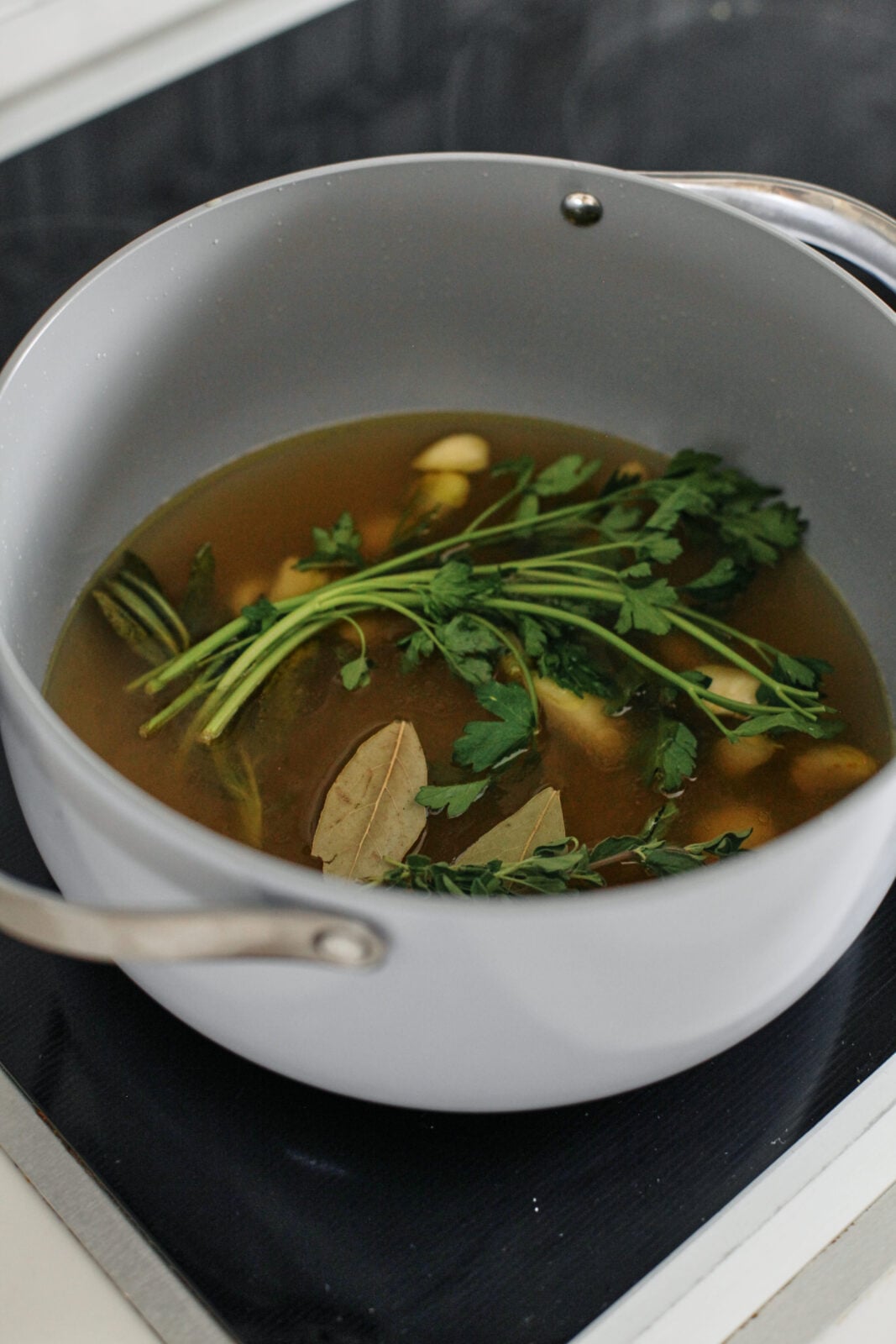
Pour in the chicken stock or water, then add the parsley, thyme and bay leaves. Bring to a gentle simmer, reduce the heat to medium-low and cook for about 15 minutes. Don’t let it boil! A gentle simmer is what mellows out the garlic.
Step Three:
While the soup simmers, sprinkle a layer of grated Gruyère into a nonstick skillet over medium heat. Place the bread slices right on top of the cheese and cook until the cheese is melted and golden. Flip and toast the other side for another 1–2 minutes, until lightly browned.
Step Four:
Remove and discard the herbs and bay leaves. Blend the soup right in the pot with an immersion blender until smooth. You can also carefully transfer it to a countertop blender, blend, then pour it back into the pot. Remove from the heat.
Step Five:
In a small bowl, whisk together the eggs (or yolks) and the remaining 1 tbsp olive oil. Slowly add a ladle of the blended soup while whisking constantly, which warms the eggs without scrambling them. Pour the egg mixture back into the pot and stir until combined. Season with salt and pepper to taste.
Step Six:
Ladle the soup into bowls, top with the crispy Gruyère toast and finish with a little fresh Italian parsley.

Substitutions
Stock: Water is traditional, chicken stock adds richness and flavour, and vegetable stock keeps it vegetarian.
Eggs: Whole eggs or just yolks both work. Using the yolks only makes it a bit richer, but whole eggs provide more protein.
Cheese: Gruyère is my pick, but Comté, Swiss or Parmesan work too.
Bread: Any crusty bread works like baguette, sourdough, or a country loaf.
Make it Vegetarian: Use water or vegetable stock.
Make it Gluten-Free: Use your favourite GF loaf for the sliced bread.
Make it Dairy-Free: Skip the Gruyère—or grab a dairy-free version—and sear the bread in olive oil instead. The soup itself has no dairy.
Storage & Reheating
Fridge: Store leftover soup in an airtight container for up to 3 days. It’s best to make new cheesy toast when you’re ready to enjoy again.
To Reheat: Warm gently over low heat, stirring often. Don’t let it boil or the eggs can curdle.
Freezer: For the best texture, freeze the blended soup before adding the eggs (after Step 4) for up to 3 months. Thaw, reheat gently, then temper in fresh eggs before serving.
FAQ
Does garlic soup taste really strong?
Not this one. The cloves stay whole and simmer gently, so they turn soft and mellow rather than sharp.
How do I keep the eggs from scrambling?
Temper them. Whisk a ladle of hot soup into the eggs a little at a time before adding them to the pot, and make sure the pot is off the heat.
Can I make it without eggs?
Yes, you’ll just get a thinner, brothier soup. Closer to the simplest traditional versions, actually.
What’s the difference between Aïgo Boulido and Česnečka?
Aïgo Boulido is a light, herby Provençal broth. Česnečka is the heartier Czech garlic soup with potatoes and toasted bread. My Česnečka-inspired Garlic Soup is over here if you want both!
More Garlic Soup
If you’ve been here a while, you know how much I love garlic soups, especially the Czech version, česnečka, so I’m very excited to add another one to my rotation. If you’re on a garlic kick too, try my original Garlic Soup, the turmeric-spiked Golden Garlic Soup or the Mighty Greens Garlic Soup.
If Aïgo Boulido is a soup you grew up eating or one that’s near and dear to you, I’d love to hear what you think of my version! I’m always happy to learn, and I’d be honoured if you shared any family traditions, tips or advice for making the best Provençal Garlic Soup that I can.
If you make it, tag me (@britacooks)on Instagram or TikTok, I’d love to see your recreations. It also means so much when you leave a review in the comments below!
You can save this recipe for later on Pinterest, or head over to my YouTube channel to cook along with me while I walk through the whole recipe. And while you’re there, you’ll find plenty more recipes to try next!

Provençal Garlic Soup (Aïgo Boulido)
Ingredients
- 2 heads garlic (about 20 cloves) peeled
- 3 tbsp olive oil divided
- ~6 fresh sage leaves
- 3 sprigs Italian parsley plus extra for garnish
- 2 sprigs fresh thyme
- 2 bay leaves
- 4 cups chicken stock or water
- 2 large eggs (or just the yolks)
- Rustic bread: French bread, baguette, or sourdough sliced
- Gruyère cheese grated
Instructions
- To make peeling easier, blanch the garlic cloves in boiling water for 30 seconds, then remove with a strainer or slotted spoon. Let cool slightly before peeling. The skins should slip right off! This step is optional, so peel the garlic however you prefer.
- Heat 2 tbsp olive oil in a medium or large pot over medium heat. Add the whole garlic cloves and sage leaves, stirring occasionally for about 3 minutes, until the garlic and sage are just beginning to turn golden and fragrant.
- Pour in the chicken stock or water, then add the parsley, thyme, and bay leaves. Bring to a gentle simmer, reduce the heat to medium-low, and cook for about 15 minutes. Avoid letting the soup boil, as a gentle simmer helps mellow the garlic’s flavour.
- While the soup simmers, sprinkle a layer of grated Gruyère into a nonstick skillet over medium heat. Place the bread slices directly on top of the cheese and cook until the cheese is melted and golden. Flip and toast the other side for another 1-2 minutes, until lightly browned. If you don't have a nonstick skillet, you can also top the bread with grated Gruyère and pop it under the broiler until the cheese is golden and bubbly.
- Remove and discard the herbs and bay leaves. Using an immersion blender, blend the soup directly in the pot until smooth. You can also carefully transfer it to a countertop blender, blend until smooth, then return it to the pot. Remove from the heat.
- In a small bowl, whisk together the eggs (or just the yolks) and remaining 1 tbsp olive oil. Slowly add a ladle of the blended soup while whisking constantly to warm the eggs without scrambling them. Pour the egg mixture back into the large pot, stirring until combined.
- Ladle the soup into bowls, top with the crispy Gruyère toast, and finish with a little fresh Italian parsley.




What Did You Think?
Rate & Review
Join the Club